Chicken breast is the usual starting point for chicken meal prep. It is lean, which makes it easy to prep and easy to ruin. It gets cooked once, stored, and then heated again, and both of those steps can dry it out. Most of what follows is about keeping it from going too far either time.
Get the pieces to the same thickness
A breast is thick at one end and thin at the other, so the thin end overcooks while the thick end catches up. Before cooking, pound the thick end flat or slice the breast in half horizontally. Even pieces finish at the same time.
Cook chicken breast to 165°F and stop
Poultry is safe at an internal temperature of 165°F, according to FoodSafety.gov. Check the thickest piece with a thermometer and take the pan off the heat when it gets there. Cooking past that point is what makes meal prep chicken dry.
Let it rest for a few minutes before you slice it so the juices stay in the meat.
Season chicken so one batch fits more than one meal
Plain salt, pepper, and garlic work in a rice bowl, a salad, or a wrap. You can add sauce to each container instead of committing the whole batch to one flavor.
When I want to try a new marinade, I make a small batch first. If I don’t want to eat it three days in a row, I haven’t wasted a week of chicken. More on that in test meal prep recipes in small batches first.
Store meal prep chicken within two hours
Get cooked chicken into the fridge within two hours. Eat it within three to four days, or freeze it if you need it later than that (USDA leftovers guidance).
Reheat meal prep chicken gently
Add a splash of water or some of the meal’s sauce, cover the container loosely, and heat it in short bursts. Leftovers should reach 165°F when reheated. A sauce or a little liquid keeps the chicken from drying out a second time.
How one batch went for me
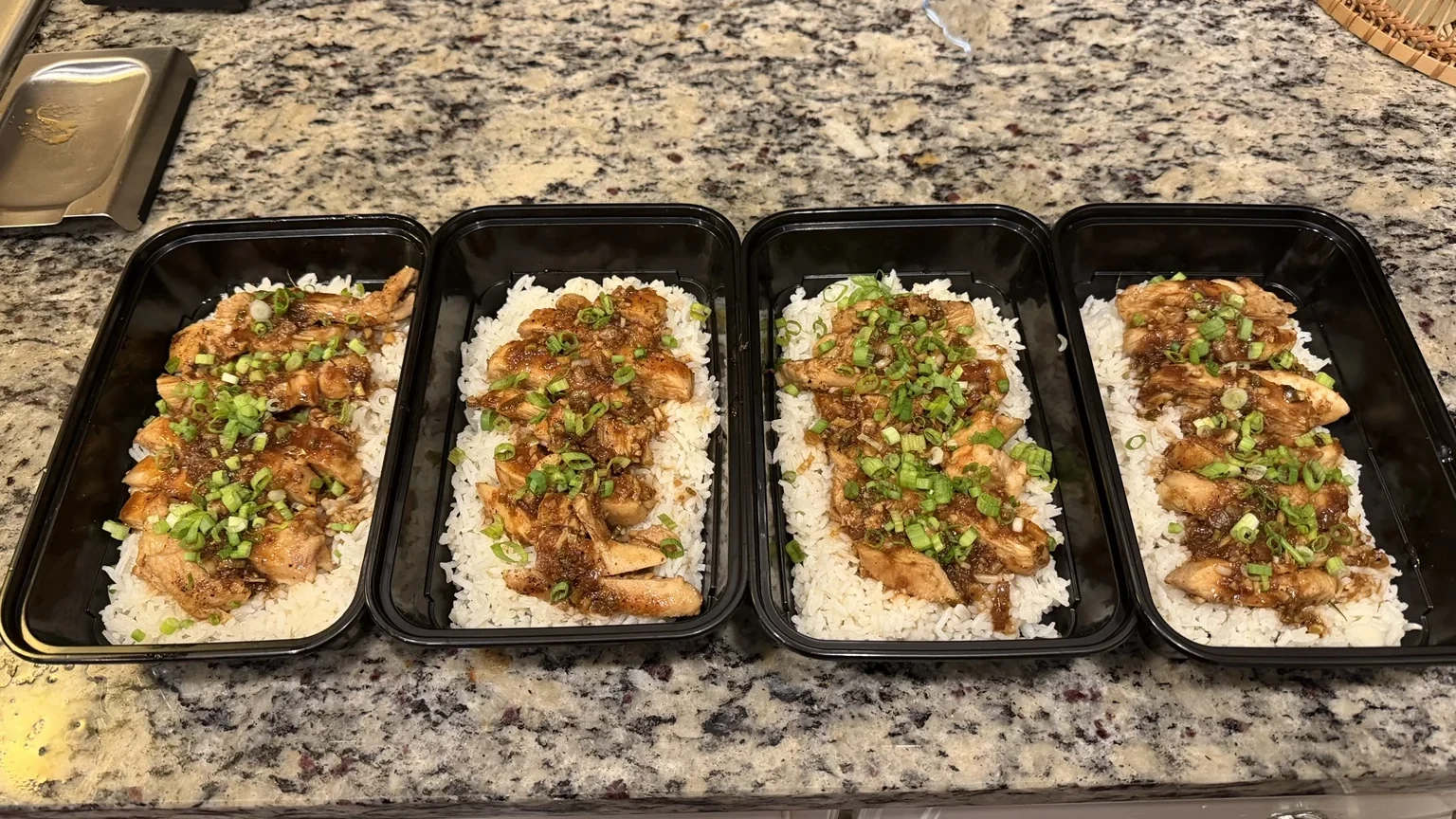
On October 10, 2026 I cooked 1.7 lb of thin boneless, skinless chicken breast cutlets in a ginger teriyaki sauce and packed four portions. I patted the cutlets dry and seared them for 2 to 3 minutes per side, in two batches so they browned instead of steaming. I checked the thickest part of each one with an instant-read thermometer for 165°F, then sliced them against the grain and warmed them in the sauce over low heat for 30 to 60 seconds.
I kept one portion in the fridge for the next day. The rest went into the freezer after they cooled, and I thawed them in the fridge before reheating. Every portion got two minutes in the microwave and a tablespoon or two of bottled teriyaki sauce. The chicken stayed tender.
That is one batch. The two minutes describes my microwave and my portions, so check the temperature of yours instead of using it as a doneness check.
New to meal prep? Read the getting started guide.